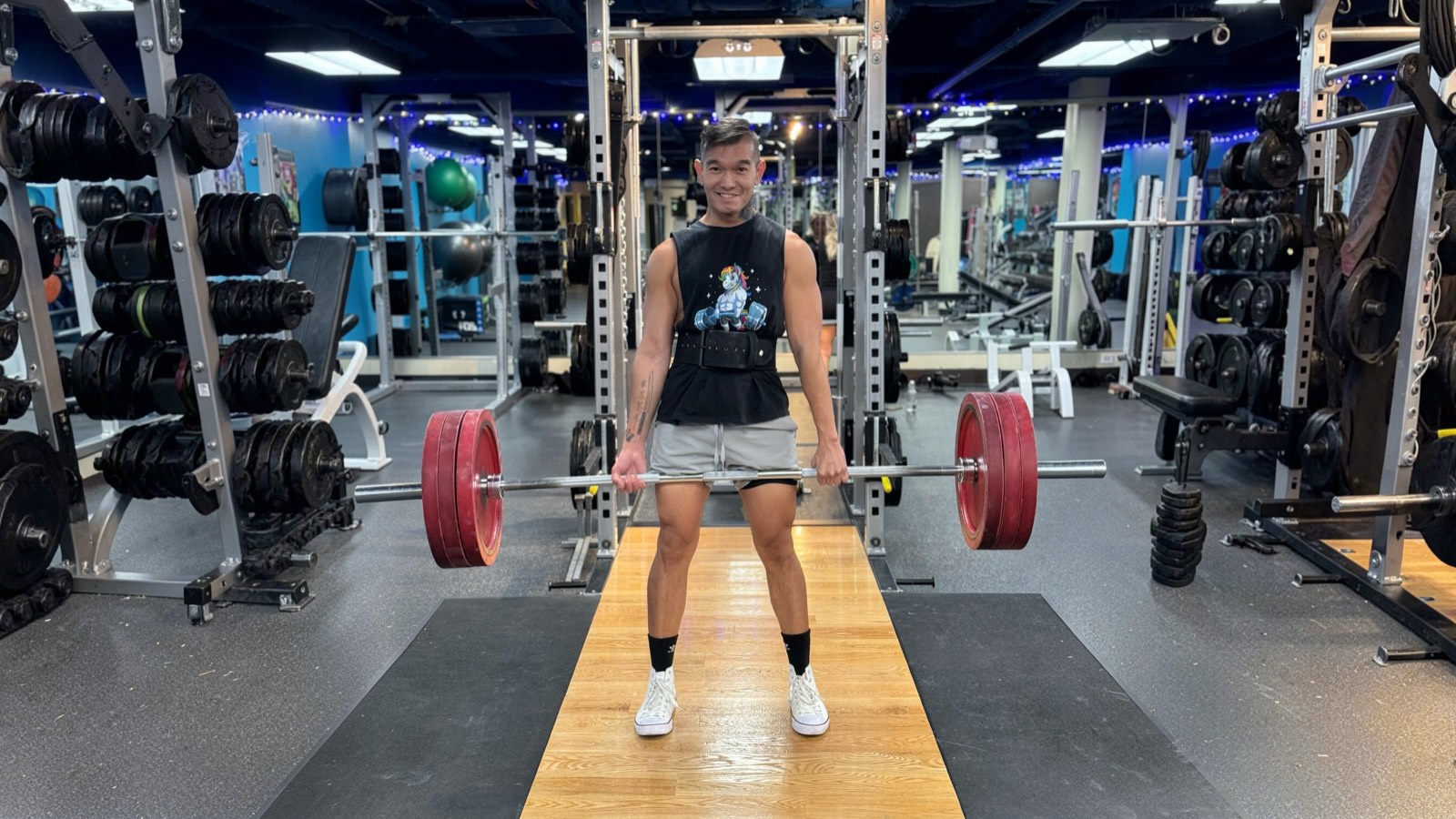
The deadlift is one of the most useful lifts you can learn — and one of the most commonly botched. Rounded backs, bars drifting away from the shins, hips shooting up before the chest — most of it comes down to a handful of fixable habits, not a fragile back.
This guide walks through safe setup, bracing and bar path, the mistakes that actually cause soreness or injury, and what a coached first session looks like.
Why the deadlift is worth learning right
The deadlift is just a hip hinge — picking something heavy up off the ground — which makes it one of the most useful patterns you'll ever train, on or off a gym floor. Groceries, moving furniture, a suitcase into an overhead bin: it's all a hinge. Learned well, the deadlift builds a back and posterior chain that holds up to daily life. Learned poorly, it's the move people blame for a bad back — usually unfairly.
Setup: get this right before anything else
- Bar over midfoot. Not against your shins, not out in front — directly over the middle of your foot.
- Feet hip-width apart, toes pointed slightly out or straight ahead, whichever lets your hips sit naturally.
- Grip just outside your legs, and pull the slack out of the bar before you pull — you should hear or feel the bar tighten against the plates.
- Shoulders slightly ahead of the bar, not stacked directly over it.
Brace and pull
Before the bar leaves the floor, take a breath into your belly and brace your core like you're about to take a light punch. Pull your chest up so your back is flat — not arched hard, just neutral — and push the floor away with your legs. The single biggest form cue that fixes most problems: keep the bar against your shins the entire way up. A bar that drifts forward even a couple of inches is the single most common reason a back rounds under load.
The cue that fixes it: if your shins are getting scraped by the bar, you're probably doing it right. Most beginners let the bar drift away out of fear of hitting their legs — and that's exactly what turns into a rounded back.
Common mistakes that cause a sore back
- Rounding the lower back under load, usually from the bar drifting forward or the weight being heavier than current bracing can control
- Hips shooting up first, turning the deadlift into a stiff-legged good morning instead of a leg-and-hip drive
- Hyperextending at the top, leaning back hard at lockout instead of simply standing tall and squeezing
- Jumping weight too fast before the pattern is automatic — the single biggest driver of deadlift injuries isn't the lift, it's the pace of loading
How much weight should you start with?
There's no universal number, and anyone who gives you one without watching you move is guessing. Start with a weight you can hold perfect form for every single rep — often just the empty bar or light plates for a true beginner — and add weight gradually only as that form holds up under load. Consistency beats a heroic first number every time.
What a coached first session looks like
- Set up. Bar over midfoot, grip set, slack pulled out.
- Brace. Breath in, core braced, chest up, back flat.
- Pull. Bar stays against the shins the whole way up.
- Lock out. Stand tall, hips through — no lean-back.
- Reset. Lower back down the same path it came up.
Getting this coached in person, even for a session or two, is worth more than a hundred YouTube videos — a coach watching your specific bar path and joint angles catches things you can't feel yourself. That's exactly what our 1-on-1 strength training is built around: technique first, every session, coached by Joe Robbins, a competitive powerlifter who's coached lifters from complete beginners to national level.
If something already hurts
A sore back after a bad rep is common; sharp or lasting pain isn't something to push through. If a niggle shows up, our resident Doctor of Physical Therapy is on-site and can help sort out whether it's a form issue, a mobility limit, or something that needs actual treatment — down the hall from the gym floor you're training on, not a separate trip across town.
FAQ
How do I know if my deadlift form is safe?
The best sign is a flat back from setup to lockout, with the bar staying close to your shins the whole way. If your back rounds under load or the bar drifts forward, that's the form to fix before adding weight.
Should beginners deadlift from the floor?
Most beginners can, once they can hold a flat back through the full range. If mobility limits a clean setup from the floor, starting from blocks or a rack pull height and working the range down over time is a reasonable progression.
Why does my back round when I deadlift?
Usually one of three things: the weight is heavier than your current bracing and hip strength can control, the bar has drifted away from your shins, or hip and hamstring mobility is limiting your setup position.
How much should a beginner deadlift?
There's no universal number — it depends on your training history and body weight. Start light enough to hold perfect form for every rep, then add weight gradually as that form holds up.
Is deadlifting bad for your back?
Not when it's coached and progressed sensibly — a strong hinge pattern is one of the more protective things you can build for your back long-term. Most deadlift injuries come from poor form or jumping weight too fast, not the lift itself.
Written by the ONE Boulder Fitness team and reviewed for accuracy by our certified powerlifting coach. Educational only — not medical advice; if you have an existing injury, check with a physical therapist before loading a new lift.
Get your deadlift coached, not guessed.
Start with a free consult and a movement assessment from a coach who watches your actual form.